
About Jourden
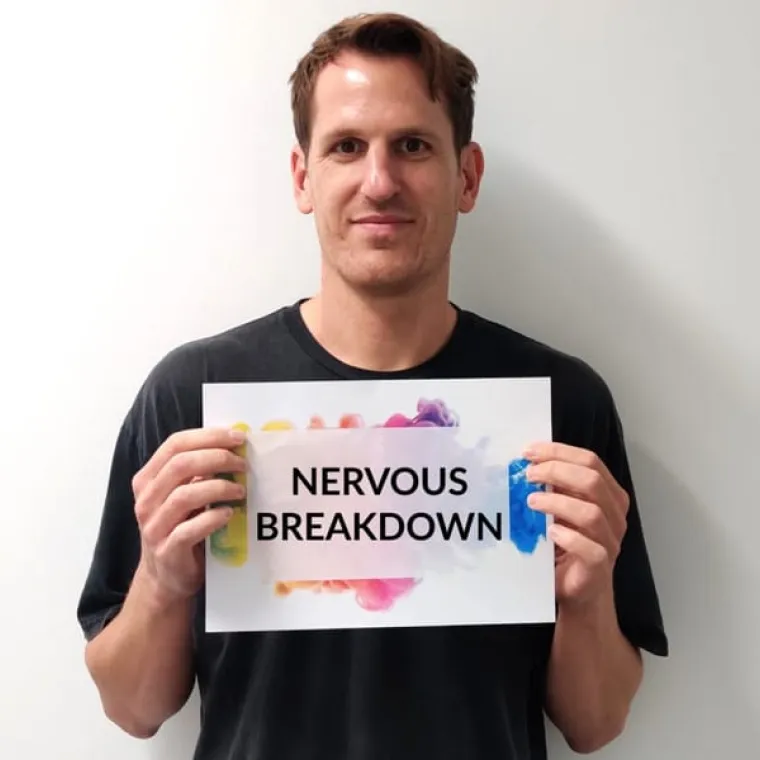
Nervous breakdown
Five years ago, I had a nervous breakdown. Despite succeeding at work, building a career and winning praise, I didn’t really know who I was. I was struck with unbearable anxiety and derealisation, and every day was a struggle. My body was giving me a signal: what do you really want? Where do you really need to be?
Beyond the portrait
Looking back there were signs throughout my life, but when my mental health became a major issue for me, it happened very suddenly.
At the time, I was working long hours including weekends. This was my choice, but I was going above and beyond to try and impress. I found the more I was complimented, the harder I worked. But this created pressure to deliver and the need for validation, which both increased as people came to expect me to maintain such a high level. I started to lose sensitivity of feelings and there was this tired blandness to tasks and life.
Everything came to a head when I woke up one day unable to function. I was so anxious I had to constantly pace up and down the living room. I had a sense of derealisation (worth googling), which really scared me, more than the anxiety. In short, I’d had a nervous breakdown.
I went to hospital and took three weeks off work, and I felt better. But it raised its head again as soon as I went back to work. Each day was a struggle. I had a diazepam in my wallet ‘just in case’. But gradually, day by day, I started to feel better.
I thought, or hoped, that was the end of it. But a year and a half later I suffered the same situation, taking months to get back to feeling ‘normal’. I now know that there is a risk that this can repeat if I don’t live the right life for me.
Embracing the power of my difference
My life has been enriched in many ways by confronting my mental health, how I really feel and who I really am.
Nearly all of us will have some kind of issue we are dealing with – in some cases these are surprisingly significant, even if everybody seems fine.
My advice is not to ignore what you are feeling and be proactive. Don’t be too hard on yourself. Something in your life is not working, and you’re not the only one. Go and see someone, whether a doctor, psychiatrist or therapist. They will help you understand if you need support, tell you the options and guide you through.
The key message is if you feel something, do something. If you feel anxious or depressed, even mildly, you should see someone. In the same way you will see a doctor if you have physical concerns, you should do the same for mental health. Learn about how you think. It’s only going to give you an edge in life. You have nothing to lose and everything to gain.
Building #BraverCultures
We can be more open about mental health. If mental health is made a more common part of conversation, it will make people more comfortable.
The truth is we are all dealing with something, whether or not we admit it, and even if we are functioning ‘well’. Your own mental well-being is always worth exploring. It also needs to be something you are prepared to invest time in, as there are never easy fixes or quick solutions. But don’t be put off by bumps and setbacks.