
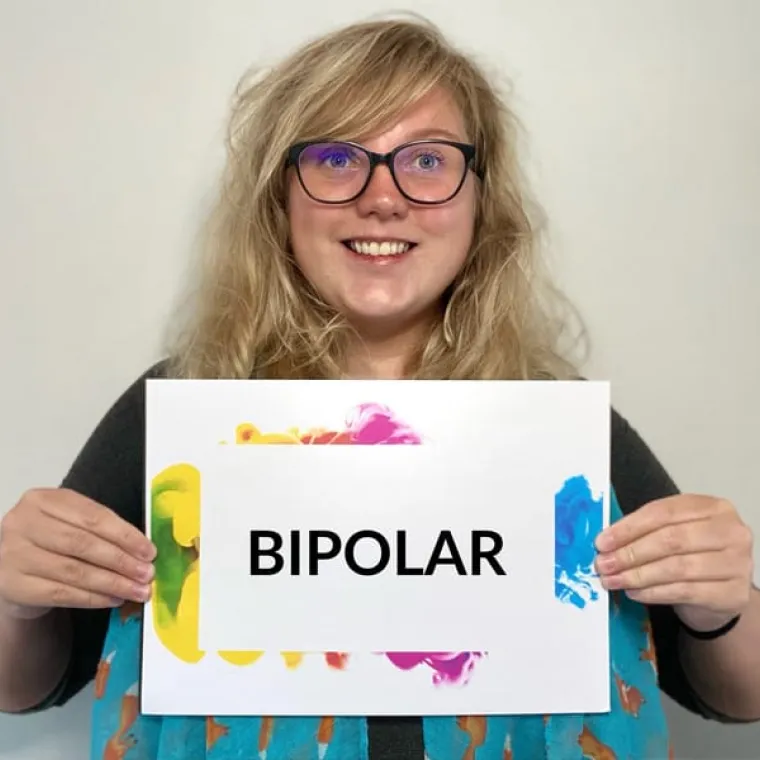
About Stacy
Bipolar
At the age of 20 I was diagnosed with bipolar disorder. I found diagnosis difficult and had to re-learn my limits – something that as, a young ambitious woman, I wasn’t too happy to hear. But getting help at a crucial time meant that my mood swings became manageable, and I now have a life I never thought possible.
Beyond the portrait
As a person with a non-visible disability, I have to proactively manage my health to have a career, a family and a life I love. Bipolar symptoms are different for everyone, but most people experience uncontrollable highs and lows (mania and depression). For the rest of my life I will be unable to control my moods without medication, therapy, a good support system and proactive self-management.
Finding the right balance between my personal goals and mental health was a lengthy, often difficult journey that took many years. In that time, despite proactive management, I would find that my lows would render me isolated, crippled by depression, guilt and anxiety and my highs at their best could lead to a few embarrassing stories or at their worst dangerous and life threatening situations.
There was little reprieve between each cycle, each feeding the other. Imagine an elastic band; the further you pull it back the harder the snap. Due to this initial instability I found myself at times homeless and alone choosing to not burden others with my illness.
Embracing the power of my difference
Mental disability is only half the story. Getting help meant that I now have lengthy periods of being within a manageable mood range, sometimes lasting years. And whilst it hasn’t been simple for me to pursue a career, I undertook a degree in law and eventually found myself in insurance.
Proactively managing my condition meant accepting myself for who I am. Through accepting myself I have become confident and personable. I thrive in social situations, and I enjoy managing others and public speaking. Depression is currently the most debilitating side effect of my bipolar, as it can be hard to see positives through a low mood. However, it does help me to be empathetic towards others’ feelings and emotions, which enables me to build strong working relationships.
I now have a career I’m proud of, a home, family, friends and I am getting married next year. All things I nor others didn’t believe was possible.
Building #BraverCultures
Imagine being so acutely aware of your potential yet seeing your life implode around you; destroying everything you have worked to achieve. Being unable to take that call, making mistakes, the inability to step outside your front door, talking embarrassing nonsense at a networking event, failing. Seeing the burden you have to place on your team or your family, and how they support you and pick up the pieces. The guilt, shame and feelings of worthlessness can be overbearing and only add fuel to the bonfire you’ve created.
My story is not in isolation, there are many other successful professionals within the insurance sector suffering from severe mental health issues who are thriving. I imagine there are some that have not had the support I have.
Everyone has a right to a career, to do their job to the best of their ability, and to be themselves. Accepting someone for who they are, and giving them the respect that we all deserve, is key.
For more information on bipolar disorder please visit the MIND website.